
Cloud computing and hybrid cloud trends

The cloud computing and hybrid cloud They have ceased to be technological options and have become the backbone of corporate strategy.
Advertisements
In 2025, it's not just about migrating, but about orchestrating. Companies are seeking a sophisticated balance between agility, data sovereignty, and cost optimization.
This scenario demands intelligent architectures and a clear vision of the digital future.
Organizations need operational flexibility without sacrificing control. Hybrid cloud offers precisely that.
It allows you to leverage the scalability of the public cloud while maintaining critical workloads on your own or private infrastructure. This model is the answer to stringent regulations and the need for low latency.
Advertisements
Native integration of environments is the major revolution. Unified management solutions facilitate workload mobility. There are no longer rigid boundaries between the on-premise and the external cloud.
What are the trends shaping the future of cloud computing?
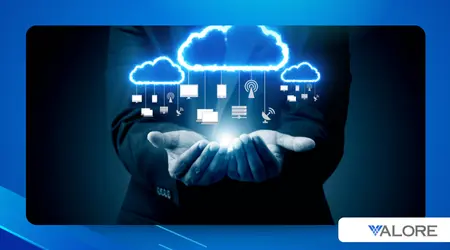
An unavoidable trend is AI as a core component of infrastructure. Artificial intelligence is driving the automation of resource management.
The suppliers of cloud compete to offer hardware specialized for the Machine Learning.
He Edge Computing It has accelerated considerably. Processing data close to where it is generated reduces latency.
This is crucial for Industry 4.0 and the Internet of Things (IoT). Think of a smart factory: instant analytics on the production line can't wait to be sent back to a distant data center.
Read more: Actors and actresses who became icons thanks to soap operas
Cybersecurity is strengthened through the cloud. Unified security platforms protect distributed environments. The model Zero Trust It becomes a global operating standard.
How does sustainability affect the design of cloud architectures?
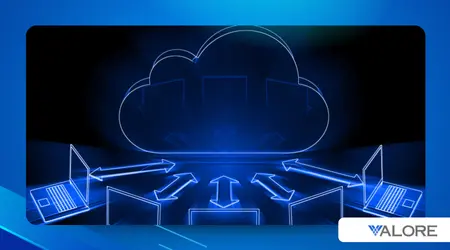
Energy efficiency is now a business imperative. The public cloud, operated by giants with carbon-neutral goals, offers an advantage.
Companies select suppliers based on their sustainability credentials.
++New digital tools for students and professionals
The concept of Green Cloud It guides infrastructure decisions. Capacity optimization and efficient use of hardware They are essential.
Adopting practices of FinOps It also contributes to the goal of a lower environmental impact.
What role does multicloud play in hybrid computing strategy?
Many organizations operate with multiple public cloud providers. This strategy, known as Multicloud, seeks to avoid dependence on a single vendor.
++Complete guide to clean and optimize your notebook step by step
It allows you to select the best service for each specific application.
The environment becomes more resilient to potential disruptions. Orchestration becomes the main challenge to overcome.
It's like conducting an orchestra of talented musicians; you need an expert conductor for a harmonious result.
Example 1: A global retail chain uses a provider's cloud for its high-traffic e-commerce.
++Cloud and edge computing: advances and trends
Simultaneously, it uses a competitor's platform for its advanced customer data analytics. This choice maximizes performance and minimizes licensing costs.
Example 2: A financial institution keeps its most sensitive transaction data in its private data center as mandated by regulation.
However, it uses the public cloud for its development and testing applications. This ensures compliance and accelerates innovation simultaneously.
The Challenge of Governance and Cost Optimization
The complexity of hybrid environments demands rigorous governance. Cost control is a persistent pain point in the cloud.
The practices of FinOps They seek to align technology spending with business value.
Transparency in spending is crucial for long-term viability. Monitoring tools offer real-time visibility into consumption.
This facilitates informed decision-making regarding scaling and architecture.
According to Gartner, global end-user spending on public cloud services will amount to $723.4 billion in 2025.
This growth underscores the importance of intelligent cost management. Can we afford to continue operating without a perfectly optimized cloud spending strategy?
The cloud computing and hybrid cloud They promise immense freedom. However, that freedom comes with a responsibility to manage it.
Companies must invest in orchestration skills and tools.
AI Integration: The New Abstraction Layer in the Hybrid Cloud
Artificial intelligence is layered over the infrastructure like an invisible layer. AI models manage performance and anticipate failures.
This leads to an infrastructure that is, in essence, self-managed.
Providers offer generative AI services accessible from any environment. The power of large language models is integrated into workflows.
The cloud computing and hybrid cloud They are the means for this democratization.
The ability to run AI models in the edge This is a key advance. It means that autonomous decision-making happens in real time.
Efficiency is maximized and dependence on the central connection is reduced.
Security and Compliance: The Cornerstone of the Hybrid Cloud
Security should be inherent, not an afterthought. Security solutions in the cloud computing and hybrid cloud They must be consistent.
Access and compliance policies are applied uniformly.
Regulatory compliance is a driver of hybrid cloud adoption. Data sovereignty regulations require on-premises solutions. Hybrid cloud enables this balance without sacrificing functionality.
Table 1: Comparison of Key Factors in Cloud Strategies (2025)
| Factor | Pure Public Cloud | Pure Private Cloud | Hybrid Cloud/Multicloud |
| Scalability | Unlimited and elastic | Limited by local hardware | High, combining the best of both |
| Data control | Lower, it depends on the provider | Maximum, total sovereignty | High, selective workload control |
| Cost (Model) | OpEx (pay-per-use) | CapEx (initial investment) | OpEx + CapEx (balanced) |
| Latency | Greater, it depends on the distance | Minimum (local) | Optimized with Edge Computing |
The future of cloud computing and hybrid cloud It goes through operational maturity. Technology becomes a silent and powerful business enabler.
The ability to innovate without interruption is the ultimate metric of success. cloud computing and hybrid cloud It's not just technology, it's a sustainable competitive advantage.
Frequently Asked Questions: Cloud Computing and Hybrid Cloud
What is FinOps?
FinOps is a cultural practice that seeks to bring financial accountability to cloud spending decisions, combining the ownership of the technical teams with the control of the financial teams.
What does "Data Sovereignty" mean?
This refers to the control and legal jurisdiction that a country or entity has over data. It is the need to ensure that data is subject to the laws and regulations of the place where it resides.
What is Edge Computing?
It's a computing paradigm that brings data storage and processing power closer to where they're needed. This reduces latency and the bandwidth required by applications.
\