
How high interest rates affect consumer credit
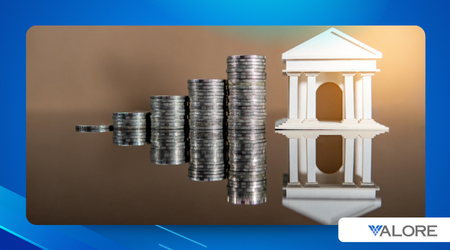
How high interest rates affect consumer credit: This is a crucial question to understand the current economic dynamics.
Advertisements
As an expert columnist, I see the relationship between the cost of money and a family's ability to borrow is direct and profound.
In essence, central banks' monetary policy decisions are felt directly in the pockets of every consumer.
The Immediate Impact on the Cost of Money
The increase in the reference interest rate automatically raises the cost of financing.
Financial institutions quickly pass this increase on to their products, making personal loans and credit cards much more expensive.
Advertisements
For the average consumer, borrowing money becomes a luxury. The purchase of financed durable goods is discouraged.
Mortgage and vehicle rates are also experiencing significant increases.
Personal budget management becomes much stricter. People must reevaluate the real need for debt.
Read more: Minimalism and change in consumer behavior
The Paradox of Consumption and Inflation
We note that the rate hike is intended to control inflation.
The central objective is to cool demand by making credit more expensive.
By curbing spending, it is hoped that prices will stop rising uncontrollably. However, this creates a dilemma for families.
They need credit, but current conditions are restrictive.
Purchasing power is reduced by inflation and expensive credit. People are putting off major purchases, such as appliances or travel.
This reduction in consumption has effects throughout the entire production chain.
The Restriction in the Flow of Credit
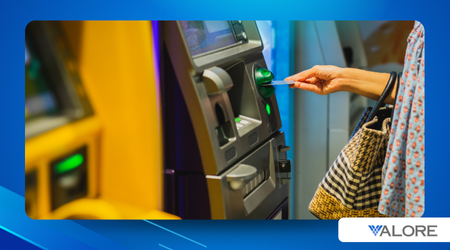
It's not just about higher rates, but also more difficult access.
Banks are taking a more cautious stance on high rates.
They're tightening the criteria for approving any type of loan. They're asking for better collateral and rigorously verifying income.
Consumers with limited credit histories are marginalized. This limits opportunities for economic advancement for many.
The gap between those who can access credit and those who cannot is widening.
++ Accessibility in the Workplace: Creating an Inclusive Environment for All
Banking prudence, although logical, strangles family liquidity.
Increase in the Existing Debt Burden
High rates hit those who already have variable debt hard.
Revolving credits, such as cards, see their interest rates increase.
++ Tips to improve productivity without complicated apps
The minimum payment amount suddenly becomes higher. A larger portion of the payment goes to covering interest alone.
This makes it difficult to repay the capital, extending the debt cycle.
This situation drastically reduces available cash flow. Many households face unsustainable financial pressure.
The risk of default and over-indebtedness increases significantly.
A Differentiated Impact by Type of Credit
Different types of credit react in particular ways.
Ordinary consumer credit experiences significant increases.
According to the Superfinanciera, the Current Bank Interest for this credit is certified in a 16,24% Annual Cash by October 2025 (Reference 1.1).
This data reflects the high cost of personal credit in the region.
++ How does the interest rate impact your loans and savings?
Meanwhile, small-dollar loans can reach much higher amounts.
This underscores the vulnerability of lower-income segments. Mortgage loans are also becoming more expensive, affecting the dream of owning a home.
All types of financing are adjusted to the general rise in the cost of money.
| Credit Modality (Reference: Superfinanciera) | Annual Effective Rate (October 2025) |
| Consumer and Ordinary Credit | 16,24% |
| Low Amount Consumer Credit | 42,90% |
| Higher Amount Productive Credit | 27,05% |
The Phenomenon of Savings and Investment
Paradoxically, high rates encourage a different activity: saving.
People perceive a better return on investment by keeping their money in deposits. The appeal of holding cash outweighs the risk of spending it.
However, the increase in savings comes at the expense of consumer spending.
This is precisely the mechanism sought by monetary policy. Money leaves the consumer market and flows into investment products.
Macroeconomic balance is sought, even if it's painful on the micro level. Individuals must decide between spending more or waiting and saving.
Consumer Psychology in Times of Restriction
The psychological factor plays a crucial role in this economic environment.
Economic uncertainty causes people to withdraw. They perceive the future as less certain and opt for caution.
They stop making big purchasing plans and limit themselves to the essentials. For example, a young couple was planning to trade in their car for a station wagon.
When calculating financing with high rates, the monthly payment triples.
They decide to postpone the purchase, directly impacting automotive sales. Another example: a microentrepreneur needed a loan to modernize his equipment.
The cost of borrowing became prohibitive, hindering investment and growth.
How high interest rates affect consumer credit and the handbrake analogy
The current economic situation works like an analogy to a car with the handbrake on.
The engine of the economy wants to move forward, but interest rates are the brake.
The vehicle doesn't come to a complete stop, but its forward motion is very slow and forced. This deceleration is intentional to prevent the engine from overheating.
Overheating, in this case, is runaway inflation.
Slow progress is preferable to a later, more severe collapse. But at what cost is this control of consumption being achieved?
Strategies to Navigate the High Rate Scenario
Families need smart strategies to minimize the impact.
Reviewing and consolidating debts with lower rates is a priority. Looking for fixed-rate financing options can provide certainty.
It is essential to build an emergency fund to avoid new borrowing.
Prioritize paying off your most expensive debts, those with revolving interest. Keeping a detailed budget becomes an indispensable tool.
Only in this way can consumers regain control of their financial lives.
How high interest rates affect consumer credit becomes a lesson in discipline.
Conclusion: The Challenge of How high interest rates affect consumer credit
The economic outlook for 2025 shows that How high interest rates affect consumer credit goes beyond a simple calculation.
It reflects an attempt at macroeconomic balance with very real repercussions for every household. High rates restrict spending and discourage debt.
This policy, while seeking to contain inflation, imposes a sacrifice on consumers. Ordinary citizens must face more expensive and scarce credit.
Navigating this scenario requires discipline, planning, and prioritizing personal finances.
Monetary policymakers face the constant challenge of calibrating the brakes. They must avoid strangling growth without allowing inflation to spiral out of control.
Only a well-executed policy will allow rates to eventually normalize. Only then will the pressure on families be alleviated.
The key to success lies in caution and informed decision-making.
The impact of How high interest rates affect consumer credit in the economy it is undeniable.
How high interest rates affect consumer credit is a topic of continuing relevance.
Frequently Asked Questions
Why do central banks raise interest rates?
They do this mainly to combat inflation.
By making money more expensive, they seek to reduce demand for goods and services, which should theoretically lead to a slowdown in price increases.
What should I do if my credit card debt has a high variable rate?
You should prioritize paying off these debts, as they are the most expensive. Consider debt consolidation or portfolio purchase options that offer a lower fixed interest rate.
Will high interest rates affect my home purchase in the long run?
Yes, they make mortgage loans more expensive, increasing the total cost of the home and the monthly payment. This reduces borrowing capacity and makes it more difficult to afford a home.
How long will this cycle of high interest rates last?
The duration depends on when central banks consider inflation to be under control and heading toward their target.
Expectations suggest a gradual normalization, but the exact timing varies by economy.
Is it a good time to save with high interest rates?
Generally, yes. High rates increase the returns on deposits and savings products, making it more attractive to save money rather than spend it.
\