
How to integrate technology into children's education
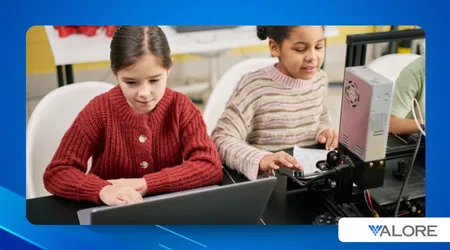
The technology in children's education It is not an optional accessory, but the very fabric upon which learning is built today; the challenge is not to use it, but to prevent it from using us.
Advertisements
Integrate the technology in children's education It goes beyond simply handing them a tablet to keep them quiet; it's about the intentional curation of intellectual experiences.
We often confuse access to information with the acquisition of knowledge. A child can browse for hours without processing a single idea, which is why parental guidance is irreplaceable.
The goal is to transform the device into a creative workshop. Instead of being passive consumers, children should learn to use the internet as an extension of their natural curiosity.
Summary
- The end of the analog-digital dichotomy.
- AI as a tutor, not as a substitute for thought.
- Ethical literacy in the face of information overload.
- Practical guide to tools for 2025.
- Time management and cognitive well-being.
How does artificial intelligence influence children's learning?
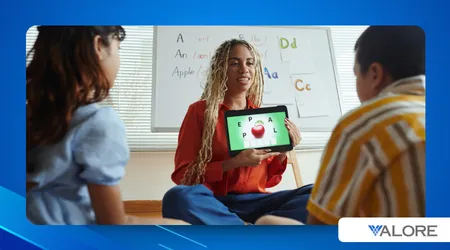
Generative AI has ceased to be science fiction and has become the driving force of technology in children's education, allowing for customization that was previously logistically impossible.
Advertisements
We're no longer talking about static software, but about systems that detect frustrations in real time. If a child gets stuck on a logic problem, the AI adjusts the language.
However, there is a clear tension: delegating reasoning to the machine. Parents must ensure that these tools serve to clarify doubts, not to negate the necessary intellectual effort.
Why is promoting early digital literacy vital?
Understanding the technology in children's education It involves dissecting what's behind the screen, from the algorithm that recommends videos to the value of private data.
++Apps to organize your digital files
It's not enough to know how to swipe; they must understand the architecture of the network. Digital literacy today is, in essence, a modern form of self-defense and critical thinking.
A child who understands how platforms are funded will be less vulnerable to manipulation. Digital literacy is the antidote to naiveté in an ecosystem saturated with misinformation.
What are the best educational tools for 2025?
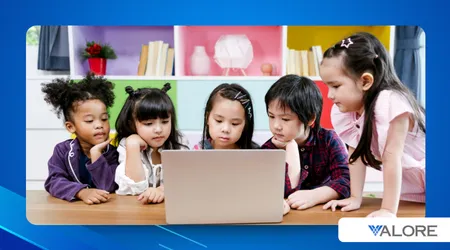
The offer is overwhelming, but the technology in children's education It must be filtered under criteria of real utility and pedagogical rigor, avoiding applications that only seek visual retention.
| Tool | Main Application | Key Benefit |
| Khan Academy | Exact Sciences | Structure without advertising |
| Duolingo for Schools | Languages | Gamification with purpose |
| Scratch | Programming Logic | From consumer to creator |
| Notion Education | Project management | Organizational discipline |
| Coursera for Teens | High-Level Courses | University transition |
When should limits be set on screen use in schools?
The use of the technology in children's education Its greatest enemy is the lack of pause, which often leads to sensory overload that blocks learning.
Neuroscience is clear: the brain needs boredom and contact with the physical world to consolidate memory. Digitalization should not cannibalize sleep or playtime.
++Digital privacy news: what changed in 2026
Establishing "Wi-Fi-free zones" is not a punishment, but a measure of mental hygiene. The deepest learning occurs when children have space to reflect on what they have just seen.
How to select quality content for studying?
Choose the technology in children's education It requires a discerning eye. It's easy to be seduced by colorful interfaces that, in reality, lack depth or verified scientific support.
Prioritize applications that encourage solving open-ended problems. If the tool provides all the answers immediately, it's probably not educating, but simply entertaining under an academic guise.
What challenges do parents face due to the digital divide?
The speed of the technology in children's education It often leaves parents behind, creating an asymmetry of knowledge that weakens the necessary family authority and guidance.
++Apps for listening to audiobooks
This gap isn't bridged by prohibition, but by participation. Sitting down with them to understand a video game or a study app eliminates the mystique and allows for much more empathetic supervision.
Accepting that our children can teach us how to use a tool does not diminish our authority; on the contrary, it creates a bridge of communication where learning becomes a shared project.
Why does gamification improve data retention?
The technology in children's education It has shown that the brain learns better when there is a reward component and visible progress, similar to the mechanics of a video game.
When a difficult concept is broken down into levels or challenges, the fear of failure diminishes. Mistakes cease to be a stigma and become a necessary piece of information for progress.
++Use of technology in early childhood: what to know
This approach is particularly useful in abstract areas.
By visualizing immediate results, the student develops a perseverance that is difficult to achieve solely through passive reading of dense theoretical texts.
How to protect children's privacy online?
Safety is the foundation of technology in children's education. Every click leaves a trace that data companies are eager to collect and monetize in the long term.
It is imperative to configure devices with maximum privacy settings and educate minors about the concept of "digital identity." What they upload today will belong to them forever.
Beyond technical filters, the best protection is trust. A child who feels safe will speak up when something online seems strange, uncomfortable, or potentially dangerous.
What role does programming play in the current curriculum?
Incorporate the code as part of the technology in children's education It allows them to understand the hidden language that drives the contemporary world, from social networks to household appliances.
Programming is not just for future engineers; it is a mental exercise that teaches you to sequence ideas and find creative solutions to syntax errors or pure logic problems.
There are visual languages that allow young children to create their own animated stories. By seeing their instructions come to life, they gain fundamental confidence in their ability to influence their environment.
How to promote critical reading on digital devices?
Despite the fact that technology in children's education While it offers unlimited access to texts, on-screen reading is often more fragmented and volatile than reading on physical paper.
We must encourage the use of digital highlighting and commenting tools. Interacting with the text prevents reading from becoming a superficial activity driven by the speed of the internet.
Encouraging them to compare two different sources on the same topic teaches them to doubt the first answer offered by the search engine, developing their own criteria that are essential for their future.
The technology in children's education It is a powerful tool, but its effectiveness depends on the purpose we assign to it at home; it is not a destination, but a vehicle.
Preparing new generations for an automated environment requires that we keep alive what makes us human: ethics, analysis, and empathy. The future is not just digital.
To explore how global policies are attempting to close the learning gap, you can review the reports of UNESCO Education, where these challenges are analyzed on an international scale.
Frequently Asked Questions
At what age is it appropriate to introduce screens?
The introduction of the technology in children's education It should be delayed and progressive. Before the age of two, sensory development requires direct physical interaction with the real environment.
How can you tell if usage is excessive?
When a child shows extreme irritability when leaving the device or abandons interests that were previously passionate about them, it is time to re-evaluate the weight of digitalization in their daily routine.
Are physical books better than digital books?
Both take place. technology in children's education It facilitates quick searching, but the physical book remains superior for deep concentration and necessary eye rest.
Is parental control enough protection?
No. Monitoring tools are useful, but values education and open communication are the only defenses that work when the child is off the technical radar.
\