
The Innovations That Are Transforming the World
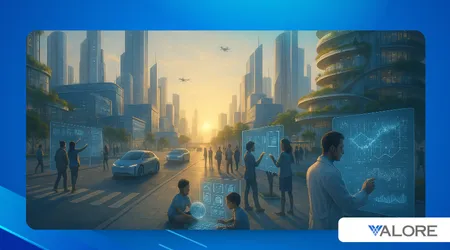
At a time when the technology and global innovation They are reshaping economies, societies, and business models; it is essential to understand how these transformations work and what role they play.
Advertisements
What is global technology and innovation?
When referring to technology and global innovationIt refers to the set of technological advances—such as artificial intelligence, autonomous systems, or quantum computing—that are no longer limited to a country or region, but are extended, adopted, and adapted in different ecosystems around the world.
According to the United Nations Conference on Trade and Development (UNCTAD) report “Technology and Innovation Report 2025”, artificial intelligence is at the technological frontier and its deployment requires closer international cooperation.
Likewise, the World Intellectual Property Organization's (WIPO) Global Innovation Index 2025 analyzes 139 countries and measures science, technology adoption and socio-economic impact.
Therefore, talking about global innovation means recognizing that change occurs simultaneously on multiple fronts—research, market, regulation, citizen adoption—and with effects that transcend borders.
Advertisements
Why is global technology and innovation transforming the present and the future?
The pace of progress is no longer incremental, but often exponential. A McKinsey & Company analysis of technology trends for 2025 identifies that autonomous systems—physical robots, digital agents—are moving from pilot projects to real-world applications.
Furthermore, the UNCTAD report highlights that artificial intelligence applied to development requires national policies and international cooperation.
There are several key reasons why this agenda matters:
- Efficiency and productivity: companies that adopt disruptive technologies create competitive advantages.
- Inclusion and equity: if innovation is managed well, it can close gaps; if not, it can widen them.
- Sustainability: Environmental, energy, and social challenges require innovative approaches.
- Geopolitics: countries, regions, and blocs are competing to lead the next technological wave. For example, private investment in AI reached $33.9 billion in 2024, an 18% increase over the previous year.
In summary, global technology and innovation are not just "the new thing" but something that is redefining how we live, work, and coexist.
++Crisis, Changes and Opportunities: What is Driving the World Economy?
What are the main trends shaping the agenda?
In the current context, at least five technological vectors stand out that deserve attention.
1. Artificial intelligence and autonomous agents
More and more organizations are reporting AI use: 78% of global companies stated they would implement it in 2024, compared to 55% the previous year.
AI no longer just "assists"; it's starting to handle entire tasks, optimize workflows, and collaborate on decisions. The Bain & Company report states that leading companies improve their EBITDA by between 10 and 25 percent thanks to AI.
This type of innovation also requires ethical frameworks, transparency, and participatory governance.
++Major technology companies are investing in sustainable hardware and clean technology
2. Quantum computing and advanced materials
The year 2025 was declared by the United Nations Educational, Scientific and Cultural Organization (UNESCO) as the International Year of Quantum Science and Technology, which underlines the emerging relevance of this area.
The report “Top 10 Emerging Technologies of 2025” prepared by the World Economic Forum (WEF) identifies innovations in structural batteries, living therapies, osmotic energy, among others.
These technologies are redefining sectors such as energy, health, transportation, and construction materials.
3. Connectivity, Internet of Things (IoT) and 5G/6G
The expansion of faster networks and the proliferation of connected sensors are enabling new models—smart cities, real-time logistics, value chain automation
For example, in 2024-2025 initiatives were launched in several countries to enable smart manufacturing, autonomous machinery, and interconnected data networks.
4. Sustainability, circular innovation and green technology
The climate challenge demands innovative technological solutions: energy storage, carbon capture, biodegradable materials, circular economy.
The combination of innovation and sustainability is part of the new normal. One example is the application of modular and recyclable materials in wearables.
The ability to innovate not only technologically, but also in models and processes, is key.
5. Distributed innovation and global talent
The globalization of innovation is evident: WIPO's innovation tracker indicates that adoption, financing, and technology transfer are no longer concentrated in just a few countries.
Countries like India, China, and Japan are among the ten most important technology markets in 2025. The Economic Times
In this context, international collaboration, access to talent, and the ability to scale innovations become competitive advantages.
How are businesses and governments responding?
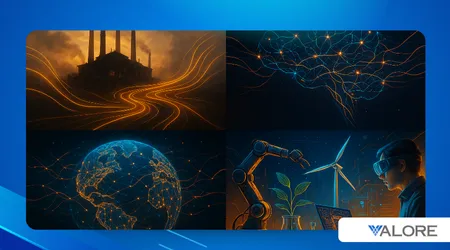
Government and strategic innovation
Governments are launching support policies, adaptive regulations, and international cooperation schemes. For example, China announced its intention to strengthen the large-scale application of AI models, supported by investments in smart manufacturing and fundamental data.
UNCTAD emphasizes that preparing to harness AI for development requires specific national policies.
The public agenda is geared towards: equitable access, minimizing risks, boosting infrastructure, talent and regulations.
Companies, adoption and competitive advantage
Organizations leading in digital transformation adopt emerging technologies with a strategic approach. The Bain report indicates that technology “leaders” are already outpacing laggards, who are falling behind.
Moreover, innovation is no longer just R&D: it involves business model, ecosystem, and organizational culture. Corporations that integrate global technology and innovation into their DNA create barriers to entry for others.
Citizens, users and social change
From smart homes to personalized healthcare, technology is permeating everyday life. The challenge lies in ensuring that adoption is inclusive and does not widen existing gaps.
Digital responsibility, technological literacy, data ethics, and privacy are becoming conditions for sustainable innovation.
6 affordable apps and devices that simplify household chores and organization
What are the key challenges that accompany innovation?
The ambition for transformation also faces obstacles. Identifying these challenges allows us to prepare for and mitigate them.
Inequality of access
Innovation risks primarily benefiting those who already have the capacity and resources. The digital divide could widen if there is no explicit commitment to inclusion.
The WIPO report warns that technology adoption and socioeconomic impact vary considerably between countries.
Ethics, governance and trust
The speed of technological development raises questions about control, bias, surveillance, and accountability. The governance of AI and autonomous systems still lacks agreed-upon frameworks.
For example, the fragmentation in global AI governance was noted at the AI Summit in Paris 2025.
Sustainability and environmental risks
All innovation must consider its environmental footprint, energy consumption, resource impact, and product life cycle. Otherwise, the technology could generate negative externalities.
Skill, talent, and labor reorganization
The adoption of new technologies requires changes in skills, roles, and work structures. Organizations must manage the transition with training, flexibility, and a long-term vision.
Security, interoperability and global standards
The proliferation of technologies without standards can lead to operational chaos, insecurity, and poor interoperability. It is vital to develop technical, legal, and operational frameworks that allow for reliable scalability.
Table: Panorama of Global Technology and Innovation in 2025
| Technology area | Current state | Strategic involvement |
|---|---|---|
| Artificial intelligence | 78% of organizations will use AI in 2024 | Transformation of processes and decisions; competitive advantage. |
| Quantum computing | International Year of Quantum Science 2025 | Structural change in cryptography, materials, simulation. |
| Connectivity/IoT | Accelerated deployment of 5G-6G and sensors | Smart cities, logistics, digital manufacturing. |
| Sustainable innovation | Modular materials, circular economy | Development aligned with environmental and social goals. |
| Global/Distributed Talent | India, China and Japan among the top 10 tech markets in 2025 | International collaborations, distributed innovation. |
When and how will the changes become more visible?
The effects are already present, but their full impact will unfold between 2025 and 2030. According to McKinsey, various industries are in the transition phase from pilots to mass deployments.
The pace will depend on factors such as investment in infrastructure, responsible regulation, human capital, and a willingness to embrace change.
Companies and countries that wait too long may fall behind; conversely, those that act with vision can consolidate leadership.
In practical terms, the changes will be most tangible in:
- Supply chain and logistics automation.
- AI-powered personalized healthcare in diagnosis and treatment.
- Smart clean energy combined with IoT networks.
- Education and training based on data analytics and augmented reality.
Each actor must assess their position, identify opportunities, and adjust their strategy.
What does the immediate future hold, and what should someone who wants to be prepared consider?
Moving into the second half of the decade, some guidelines become crucial:
- Adopting the "innovate for all" mindset: fostering access, equity, and participation beyond traditional centers of power.
- Design policies and business models with governance, ethics, and transparency integrated from the outset.
- Proactively managing talent: training, reinventing roles, and a culture based on data and innovation.
- Establish strategic alliances: between companies, sectors, and countries. Global innovation does not happen in isolation.
- Assess real impact: not only implement technology, but measure social, environmental and economic results.
For example, circular innovation and sustainability will become increasingly important in supplier selection, regulatory compliance, and corporate reputation.
A relevant resource that illustrates good practices in innovation is the OECD's portal of innovation initiatives and public policies.
Conclusion
The outlook shows that the technology and global innovation It's no longer a distant future: it's here, operating and transforming realities.
Countries, companies, and individuals who want to lead must recognize that speed is not the only thing that matters: direction, values, fairness, and sustainability also matter.
At this crossroads, those who embrace enlightenment, cooperation, and responsible governance are well-positioned for a future that once only existed in science fiction. Those who delay risk being left behind by the next wave.
The invitation is clear: actively participate in the change, understand the fundamentals, apply them judiciously, and collaborate.
Anyone can be part of this transformation, from small businesses to large corporations, from public institutions to individuals who decide to develop new skills.
Innovation is about shaping the next era, one in which technology and humanity come together to create value, with purpose.
Frequently Asked Questions
Q1. Is the expression “technology and global innovation” limited to large companies or developed countries?
No. Although resources may favor those with greater capacity, this phenomenon also affects startups, emerging governments, and local communities.
Digital platforms, remote talent, and distributed innovation are lowering barriers.
Q2. What are the risks of ignoring this wave of innovation?
Those who do not adapt their models may experience a loss of competitiveness, be left out of emerging value chains, or fall into technological gaps that limit growth.
Furthermore, in the social sphere, the promise of inclusion through technology will no longer be fulfilled.
Q3. How can a small company prepare to participate in this agenda?
First, it's crucial to assess your technological and cultural starting point. Then, define which emerging technologies are relevant to your business.
Next, design a phased adoption roadmap, ensuring team training and measuring results. Finally, consider partnerships with third parties.
Q4. Is there a global regulation to manage the risks of these innovations?
At the international level, there has been progress: for example, the Paris AI Summit (2025) sought to promote a common framework. However, regulation remains fragmented. Financial Times
Organizations need to anticipate regulatory scenarios and adopt good governance practices.
P5. What will be the impact on employment and the skills required?
The impact will be profound but varied: new jobs will be created —in AI, robotics, sustainability—; at the same time, some traditional roles will be transformed or disappear.
The key will be the ability to learn, adapt, and collaborate with technology.
Advance preparation is undoubtedly an advantage.
